Surge protection devices explained: why SPDs matter in modern UK homes
A surge protection device, usually called an SPD, is one of those parts of a consumer unit that many people do not notice until someone points it out.
But with modern electronics, solar inverters, battery storage, EV chargers, smart controls and expensive appliances now common in UK homes, surge protection is becoming much more important than it used to be.
Important: this guide is practical information, not a substitute for a site-specific electrical design or inspection.
Surge protection devices must be selected and installed correctly. Always follow the latest wiring regulations, manufacturer instructions and advice from a competent electrician.
I wanted to write this guide because SPDs are often treated as an optional extra, or just another module inside a consumer unit. In reality, they can play an important role in protecting the equipment we now rely on every day.
Years ago, a typical house might have had a few basic appliances and far less sensitive electronics. Now it is normal to have smart TVs, routers, computers, boiler controls, LED drivers, smart meters, alarm systems, EV chargers, solar inverters and battery storage.
The more electronic equipment we connect, the more important it becomes to think about transient overvoltage protection properly.
Affiliate disclosure: this page may include affiliate links.
If you choose to buy through them, PluginSolarHub may earn a commission at no extra cost to you. That helps support the site and keeps the guidance free.
Products and brands are included because they are relevant to the topic, not because a link is available.
In this guide
What is an SPD?
SPD stands for Surge Protection Device. Its job is to help protect an electrical installation and connected equipment from short, sharp voltage spikes known as transient overvoltages.
In simple terms, an SPD gives a surge a safer path to earth before that surge can travel further into sensitive electronics. It does not stop electricity from working normally. It sits in the background and reacts when the voltage rises above a certain level.
Simple version:
an SPD is there to reduce the risk of damage from voltage spikes. It is not a magic shield, but it is an important layer of protection in a modern electrical installation.
Why electrical surges happen
Electrical surges can happen for different reasons. Some come from outside the property, and some are created inside the electrical system itself.
External surges
External surges can be caused by events such as lightning activity, faults on the supply network, or switching events on the wider electrical grid. A direct lightning strike is not the only concern. A nearby strike or a surge travelling through an overhead supply can still create a damaging transient overvoltage.
Internal surges
Surges can also be created by equipment switching on and off. Motors, pumps, transformers, compressors, LED drivers, heating controls and other electronic equipment can all contribute to electrical noise and switching transients.
One small event may not destroy equipment immediately. But repeated smaller surges can stress electronic components over time. That is why some damage is instant, while other damage only becomes obvious later.
Why SPDs are more important in modern homes
The main reason SPDs matter more now is simple: homes contain more sensitive electronics.
Modern devices often use circuit boards, power supplies, microprocessors, sensors and communication modules. These parts can be vulnerable to voltage spikes.
| Modern equipment | Why surge protection matters |
|---|---|
| Solar inverters | Expensive power electronics connected to both DC solar input and AC output. |
| Battery storage systems | Contain battery management systems, chargers, inverters and control electronics. |
| EV chargers | Use control electronics and are connected to high-power circuits. |
| Smart TVs and computers | Sensitive electronics can be damaged by voltage spikes. |
| Routers and smart home devices | Often left powered all day and connected to data networks. |
| Boiler controls and heat pumps | Modern heating systems rely heavily on electronic control boards. |
| Smoke alarms and safety systems | Important equipment where reliability matters. |
My view:
when you compare the cost of an SPD with the cost of replacing a solar inverter, battery system, router, TV, computer or heating control board, surge protection starts to make a lot of sense.
What does an SPD look like in a consumer unit?
In many domestic installations, the SPD is installed inside the consumer unit or in a separate enclosure close to it. The photo below shows an example of a surge protection device fitted next to the main switch.
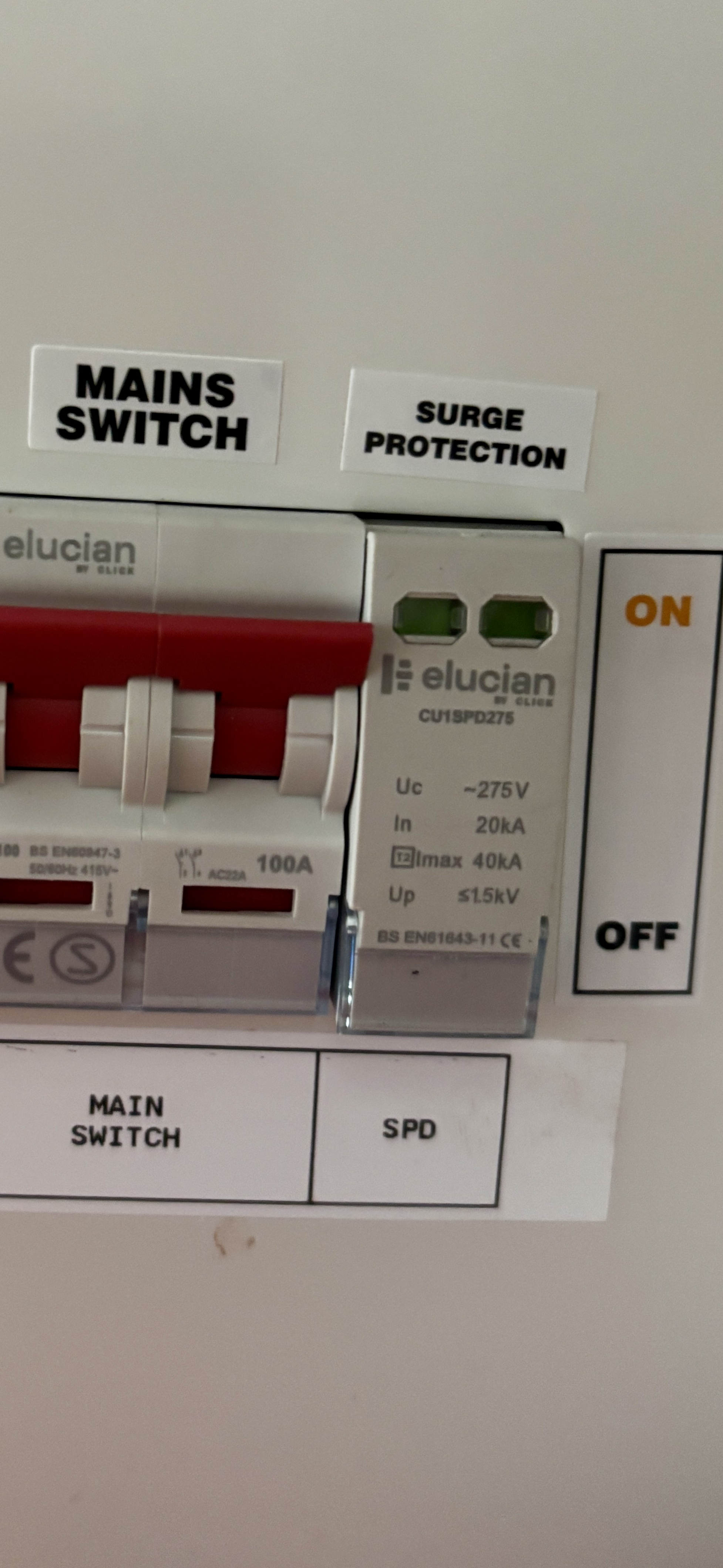
The exact layout will vary depending on the consumer unit, manufacturer and installation design. Some SPDs are built into the board, some are fitted as separate modules, and some installations may need surge protection in an external enclosure.
The status window on many SPDs shows whether the device is still healthy. If the indicator changes to show a fault or end-of-life condition, the device needs checking and may need replacing.
Why SPDs matter with solar panels and battery storage
Solar and battery systems make surge protection especially important because they add expensive electronics to the property. A solar inverter is not just a simple switch. It is a power electronic device that manages DC from the panels, converts it to AC, tracks the solar array and communicates with monitoring systems.
Battery systems add even more electronics: battery management systems, charge control, inverter stages, communication links and safety monitoring.
Solar systems can have more than one surge route
With solar, a surge may affect the AC side of the installation, the DC side from the panels, or connected data and communication cables. That is why surge protection should be considered as part of the whole design, not just as one device thrown into the consumer unit.
Depending on the installation, protection may be needed:
- at the consumer unit or distribution board
- near the inverter
- on long DC cable runs from solar panels
- where cables enter or leave buildings
- on communication or data lines where relevant
Important solar point:
AC surge protection at the consumer unit is useful, but it may not be the whole answer for every solar or battery installation. The inverter instructions and system design need to be checked properly.
If you are learning about the panel side of a system, start with my wider guide here: the complete solar panel guide for UK buyers.
If you are looking specifically at batteries, this guide is also relevant: plug-in battery storage in the UK.
Type 1, Type 2 and Type 3 SPDs explained
You will often see SPDs described as Type 1, Type 2 or Type 3. The correct type depends on the installation and the risk being managed.
| SPD type | Typical use | Simple explanation |
|---|---|---|
| Type 1 SPD | Origin of installation where lightning protection or overhead risk may require it | Designed to deal with high-energy lightning-related surge currents. |
| Type 2 SPD | Consumer units and distribution boards | The common type many homeowners will see in a modern consumer unit. |
| Type 3 SPD | Close to sensitive equipment | Fine protection near equipment, normally used in addition to upstream protection. |
A common domestic consumer unit SPD is often Type 2, or sometimes a combined arrangement depending on the board and installation. However, it is important not to guess. The correct device depends on the supply, earthing arrangement, cable routes, equipment being protected and manufacturer instructions.
SPDs in consumer units
Many modern consumer units now include space for an SPD. On a new board, the SPD may be fitted beside the main switch, or it may be installed in a dedicated part of the board.
Retrofitting an SPD to an existing installation can sometimes be possible, but it depends on the consumer unit, available space, condition of the installation and whether a separate enclosure is needed.
Important things an electrician will check
- the type of earthing system
- the supply arrangement
- the consumer unit condition and available space
- the correct SPD type and rating
- the manufacturer’s wiring requirements
- backup protection and cable lengths
- whether the SPD needs coordination with other SPDs
- whether solar, battery, EV or outbuilding circuits change the design
Good installation practice matters:
an SPD is only useful when it is selected, installed and connected correctly. Short connection leads, correct protective devices and proper earthing all matter.
What an SPD does not do
It is important to be clear about this. An SPD reduces risk from transient overvoltages, but it does not make an installation indestructible.
It does not replace earthing
Surge protection relies on a suitable installation and earthing arrangement. Poor earthing cannot be ignored.
It does not replace RCDs or RCBOs
RCDs and RCBOs protect against different risks. An SPD is not electric shock protection.
It does not fix bad wiring
Existing faults, loose connections, overheating or poor installation work still need correcting.
It does not guarantee no damage
Very large events, incorrect installation or surges entering through other routes can still cause damage.
Common SPD mistakes to avoid
Assuming one plug-in adaptor protects everything
Plug-in surge strips can be useful for local equipment, but they are not the same as properly designed installation-level protection.
Ignoring solar DC protection
Solar cables can provide another route for transient overvoltages. The inverter and PV design need checking properly.
Forgetting data cables
Surges can enter through communication, phone, aerial or network routes as well as mains wiring.
Not checking the indicator
Many SPDs have a status window. If it shows a failed or end-of-life state, the device needs attention.
Choosing the wrong type
Type 1, Type 2 and Type 3 devices are not all the same. The device must match the installation.
Treating SPDs as optional clutter
In a house full of modern electronics, solar equipment and battery storage, surge protection can be a sensible investment.
My practical takeaway
I see SPDs as part of making a modern electrical installation more resilient. They are not there for show, and they are not just another label inside a consumer unit.
When you have expensive electronics connected to the installation, especially solar inverters, battery storage and EV equipment, it makes sense to think seriously about surge protection.
The key is not just “fit any SPD”. The key is fitting the right protection in the right place, as part of a proper electrical design.
The bottom line:
modern homes are full of sensitive electronics. An SPD is a relatively small part of the installation, but it can help protect some of the most expensive equipment in the property.
Common questions
What does an SPD do?
An SPD helps protect an electrical installation and connected equipment from short voltage spikes called transient overvoltages. It diverts the surge towards earth before it can travel further into sensitive equipment.
Do I need an SPD in my consumer unit?
In many modern installations, surge protection is now expected or strongly recommended. The exact requirement depends on the installation, current wiring rules and whether a proper risk assessment or cost assessment applies. A competent electrician should advise based on the property.
Is an SPD important for solar panels?
Yes, surge protection is especially worth considering with solar because the inverter and associated electronics can be expensive and sensitive. Some systems may also need consideration of surge protection on the DC side, not just the AC consumer unit side.
Does battery storage need surge protection?
Battery storage contains sensitive control electronics, charging equipment and communication systems. Surge protection should be considered as part of the full system design and manufacturer instructions.
Can an SPD stop lightning damage?
An SPD can reduce risk from lightning-related transient overvoltages, but it cannot guarantee protection from every lightning event. Correct selection, coordination and installation are important.
What is a Type 2 SPD?
A Type 2 SPD is commonly installed in consumer units and distribution boards to protect against transient overvoltages. It is the type many homeowners will see in modern domestic consumer units.
Can I fit an SPD myself?
No. Work inside a consumer unit should be carried out by a competent electrician. The device must be selected, wired, protected and tested correctly.
How do I know if my SPD has failed?
Many SPDs have a visual indicator window. If the indicator changes to show a fault or end-of-life condition, the installation should be checked and the SPD cartridge or device may need replacing.
Is a surge-protected extension lead enough?
A surge-protected extension lead may help protect individual appliances, but it is not the same as installation-level surge protection at the consumer unit. For expensive systems such as solar and battery storage, the whole installation needs to be considered.
Related guides on PluginSolarHub
Useful external reference:
The IET has consumer guidance on surge protective devices and BS 7671 requirements: IET surge protective devices guidance.
This page is intended as practical guidance, not legal advice, formal design advice or a substitute for manufacturer documentation, current standards, connection requirements or site-specific electrical assessment. Electrical standards, product specifications and installation rules can change. Always check current documentation before buying, wiring or connecting any solar, battery or electrical equipment.